Backpacking in Alaska 101: The Ultimate Guide to Coming Prepared for the Alaskan Wilderness
Backpacking in Alaska is not like backpacking in the Lower 48. America’s final frontier is home to some of the most remote wilderness areas in the country, where trails are often nonexistent, weather shifts quickly, and mistakes carry real consequences. While Alaska’s scale and beauty draw people from around the world, this is not a backpacking destination for everyone. Alaska backpacking is for those who are experienced, prepared, and willing to operate outside their comfort zone. The landscapes are vast and rugged, the terrain unforgiving, and the weather unpredictable. This guide breaks down what it takes to backpack in Alaska, including gear considerations, fitness expectations, experience requirements, and the realities of traveling through true wilderness.
Why Alaska Backpacking Is Different
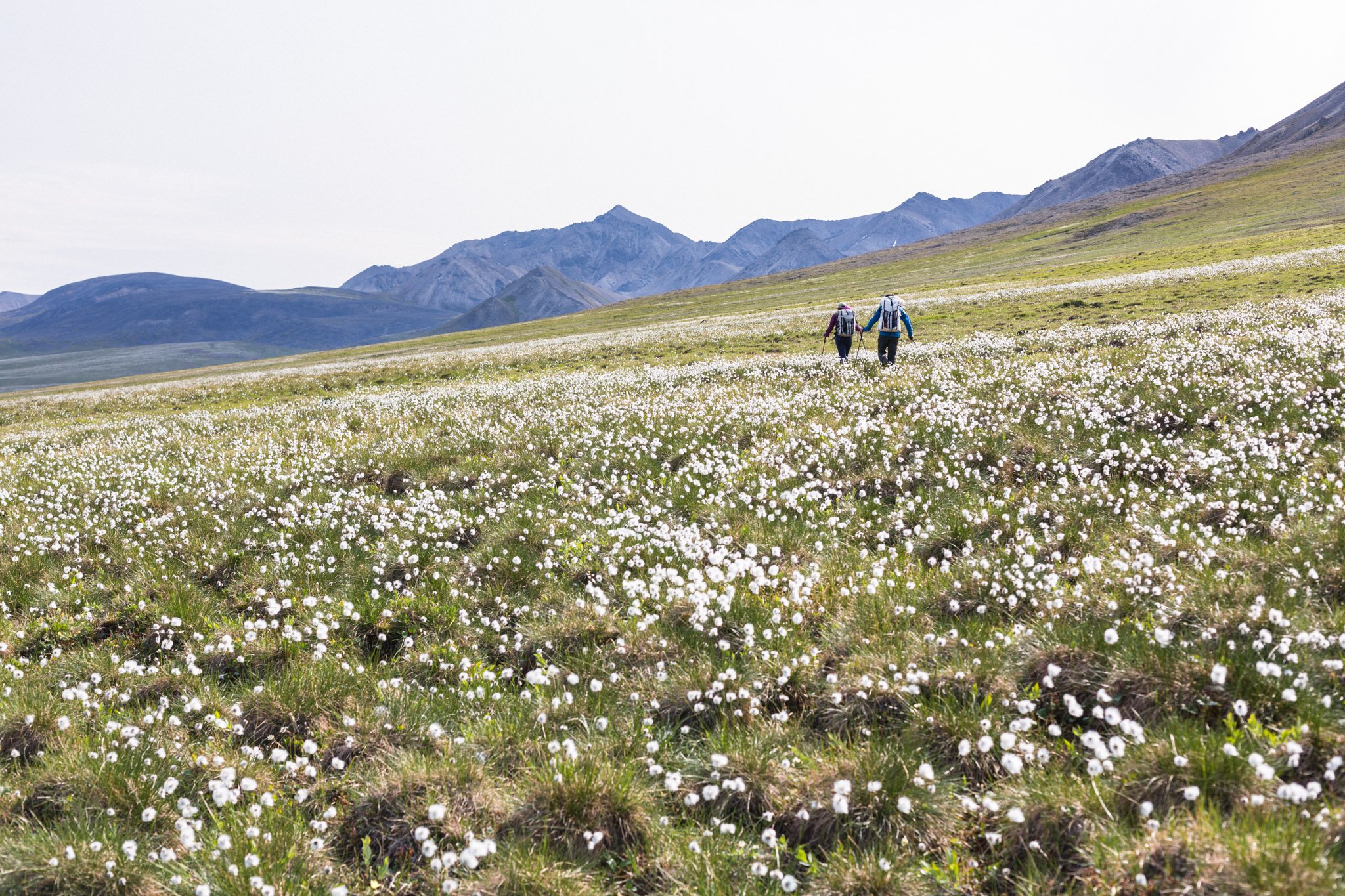
Alaska’s terrain is varied, and travel is not always trail-based. Often, it requires complex route-finding and traversing uneven terrain such as tundra, talus, and scree. Mileage isn’t always a good indicator of effort— 5 miles of tundra crossing or bushwhacking is hard to compare to 5 miles on trail in the lower 48. The nature here is as remote as it gets. There are no quick exits or easy rescue options. Cell service is rare, and mistakes can compound quickly. Then there’s the weather. It’s not uncommon to experience all four seasons in 24 hours. The sun can turn to rain, calm mornings to windy afternoons, and snow is possible at any time of year.
Dealing with Terrain

A day backpacking in Alaska often means navigating uneven terrain and traveling across multiple ecosystems, much of it off-trail. The ground is rarely dry, even in the middle of summer, and soft, unstable footing often dictates your pace. Crossing the tundra is like walking on a wet sponge. Every step requires extra effort, which drains energy despite relatively flat terrain. In alpine zones, talus and scree demand slow, deliberate movement, especially with a loaded pack. You’ll also encounter river crossings where cold, swift water is common. Water levels can change rapidly with incoming weather and snowmelt, making timing and route choices more important than they might seem.
Weather Considerations for Backpacking in Alaska
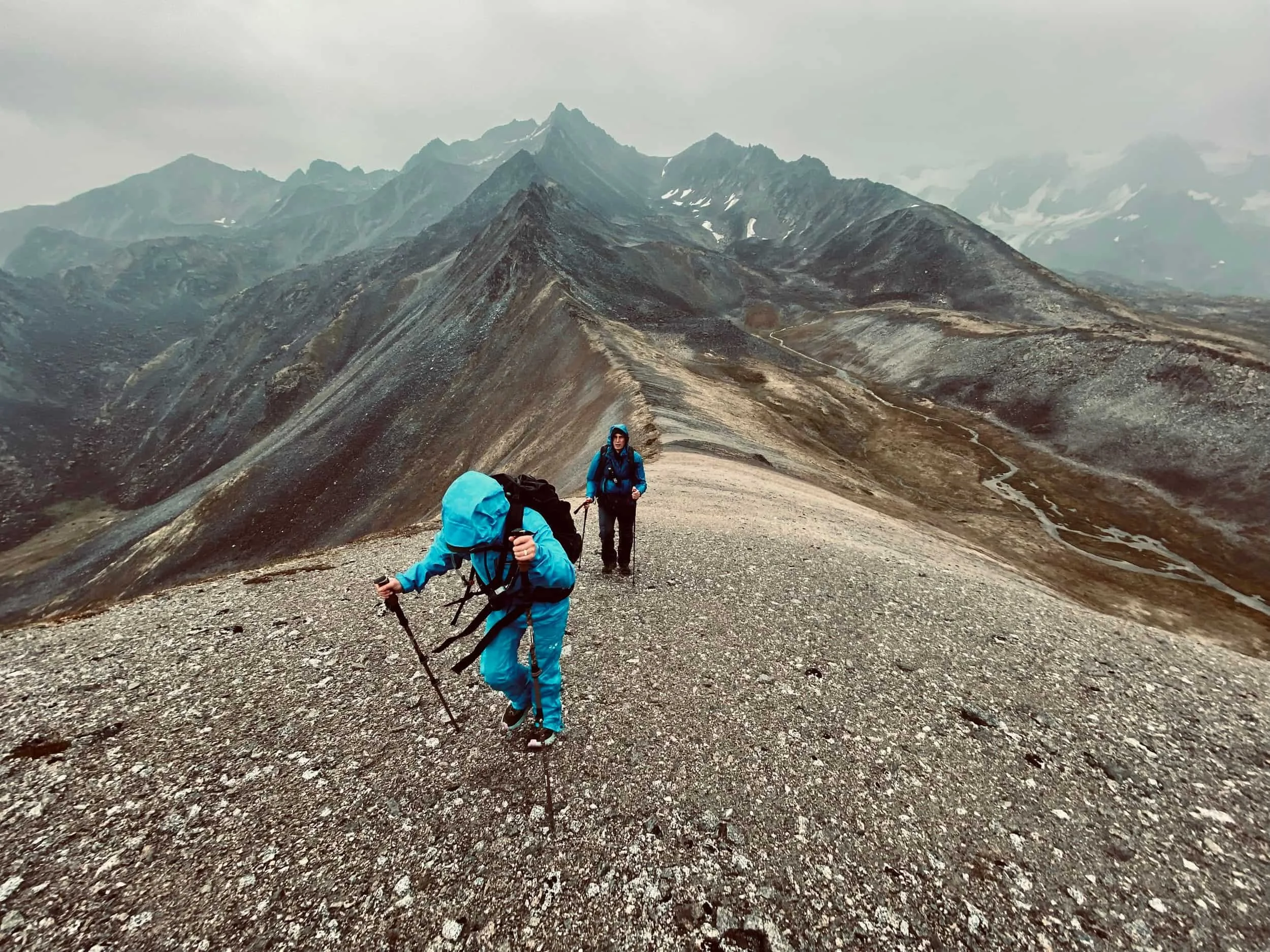
Backpacking in Alaska is generally limited to the summer months, but even then, the weather remains unpredictable. While average temperatures can be comfortable and daylight is plentiful, conditions can change quickly and without warning. Rain is common, wind exposure above tree line can be significant, and storms can roll in fast. It’s not unusual to experience sun, rain, and strong wind in a single day, with snow possible at any time of year. Because forecasts are broad and often unreliable, trips require planning for a wider range of conditions than most backpackers are used to.
Gear Considerations for Backpacking in Alaska
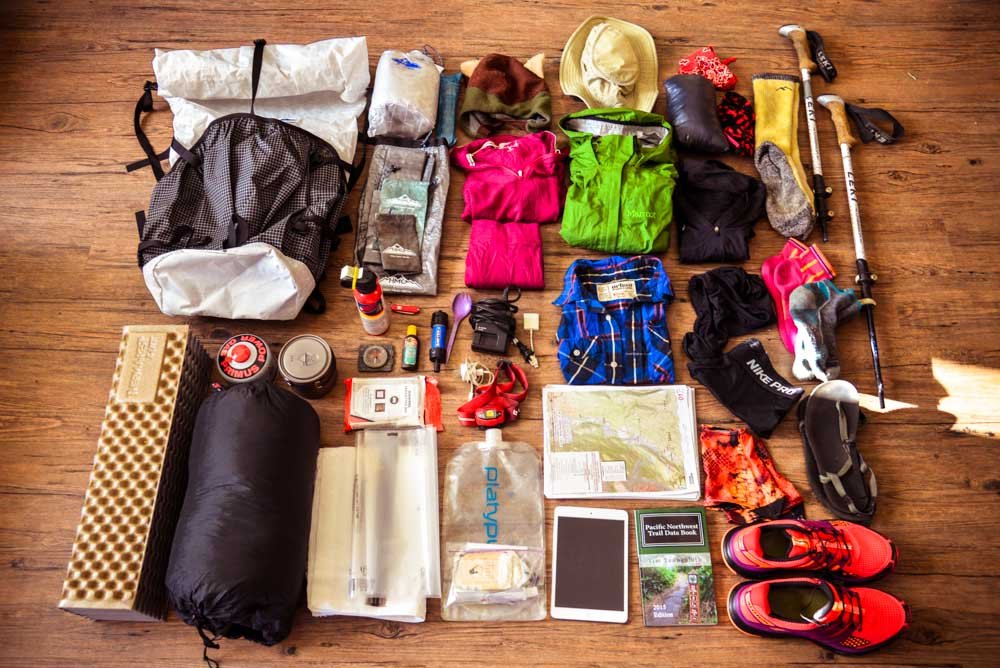
Gear for Alaska should be chosen assuming cold, wet conditions and limited options if something fails. Supportive footwear with good traction matters more than waterproof claims, as wet feet are common from rain, tundra, and river crossings. Reliable rain gear is essential—both a fully waterproof jacket and rain pants that can handle sustained rain and wind. Pack for layering. Your layers should include insulation for stops and camp, not just while moving, and sleep systems should be rated for colder-than-expected nights. Navigation tools, extra food, and basic repair items add weight, but are essential for when things go wrong.
Fitness Requirements

Fitness in Alaska is about durability, not speed. Expect long days on uneven terrain with a heavy pack. Balance, leg and core strength, and comfort moving slowly for hours matter more than pace or elevation gain. Backpackers who struggle are usually focused on mileage goals or rigid plans, while those who do well can pace conservatively, adapt to conditions, and continue making good decisions when weather or terrain doesn’t cooperate.
Guided Backpacking in Alaska

For many people, guided backpacking is the most practical way to experience Alaska’s wilderness safely and responsibly. Guides bring local terrain knowledge, weather awareness, and risk-management experience that’s difficult to replicate on a first or even a second trip. We handle route planning, logistics, and decision-making when conditions change, allowing participants to focus on moving well, learning the environment, and confidently traveling deeper into remote landscapes. Whether you’re building experience or looking to expand what’s possible in Alaska’s backcountry, a guided trip can provide both access and education that carries forward into future adventures.
If you’re ready to experience Alaska’s backcountry with knowledgeable guides who understand this terrain, Indigo Alpine Guides offers professionally led backpacking trips designed for real wilderness travel.