Denali National Park by the Season: Indigo Alpine’s Guide to Alaska’s Iconic Park
Denali National Park and Preserve is located in central Alaska, high in the Alaska Range, and spans roughly six million acres of protected land. It is home to Denali, North America’s tallest peak at 20,310 feet. The park’s landscape ranges from low-boreal forest to tundra, alpine terrain, and expansive glaciers. Sharp elevation changes create distinct climates and ecosystems that exist side by side within relatively short distances. Much of Denali lacks road access and remains true wilderness. While the park is one of Alaska’s most visited destinations, it offers a far more rugged experience than many national parks. Backpacking here is route-based and off-trail, requiring strong navigation skills and comfort traveling in remote terrain. Denali is also home to the “Big Five” wildlife species—grizzly bears, wolves, moose, caribou, and Dall sheep—which roam freely throughout the park. Understanding how the park changes through the seasons is key to planning a successful visit.
Fall in Denali National Park (Mid-September to October)
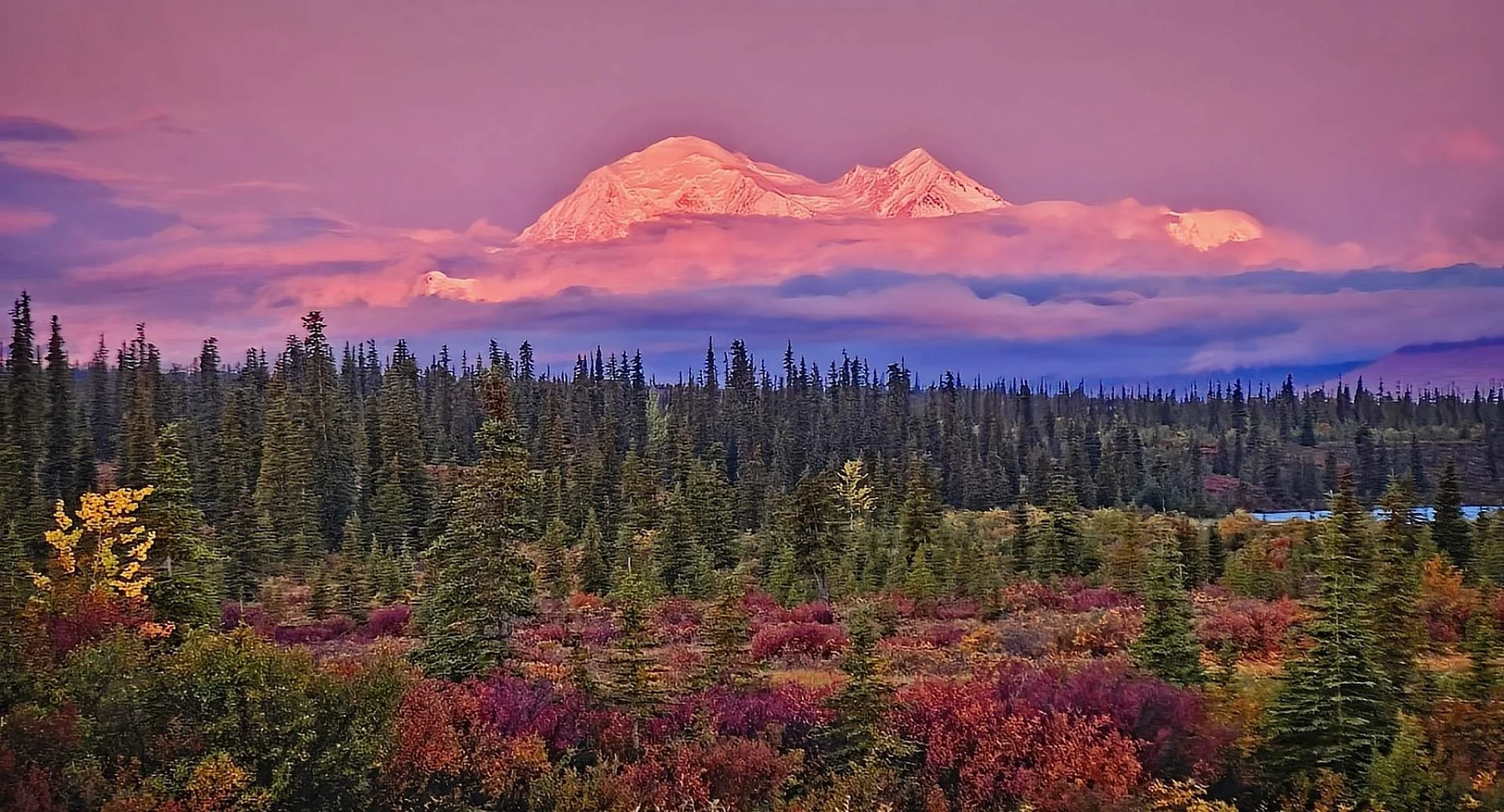
The weather changes quickly in Alaska. By mid-September, the days are getting shorter and daily temperatures begin to drop. It’s also when the tundra and the leaves change color, and the landscape is dotted with red, orange, and yellow hues of sunset. Shorter daylight hours, especially later in the season, require careful planning around limited light.
Early fall sees 14 hours of daylight with sunrise around 7 AM and sunset near 9 PM. By Late fall, sunrise shifts closer to 9 AM and sunset moves towards 6 PM. The temperature swings significantly during the season as well. Daytime highs can range from 30–60°F, depending on timing and elevation, with nighttime lows from 10–40°F. Frost is common, and snow is increasingly likely later in the fall. Visitor services and facilities begin closing after Labor Day. Bus schedules are reduced, then shut down as snow arrives, and Campgrounds close on a rolling basis.
Fall is best for experienced outdoors people who want to experience the park in relative solitude, see the leaves change, and don’t mind a bit of cold.
Winter in Denali National Park (Late October–March)

By late October, daylight hours drop significantly to 8–9 hours per day. By November, daylight is reduced to 5–6 hours, and by December, to 3–4 hours. In mid-winter, the sun rises at approximately 10:30 AM and sets around 2:30 PM, with daylight gradually increasing again by late February and March.
Winter temperatures are severe. Daytime highs typically range from –10°F to 10°F, while nighttime lows often fall between –20°F and –40°F. Wind chill can make conditions feel even colder, especially in exposed terrain.
Snowpack builds steadily throughout the season. Deep snow makes travel on foot impractical; skis or snowshoes are required. Short daylight hours and snow-covered terrain complicate navigation, and rescue options are extremely limited. Trip planning must account for extreme cold, limited light, and potential weather delays.
Winter in Denali is best suited for experienced winter travelers who are comfortable operating in extreme conditions and managing risk independently.
Spring in Denali National Park and Preserve (April–Mid May)
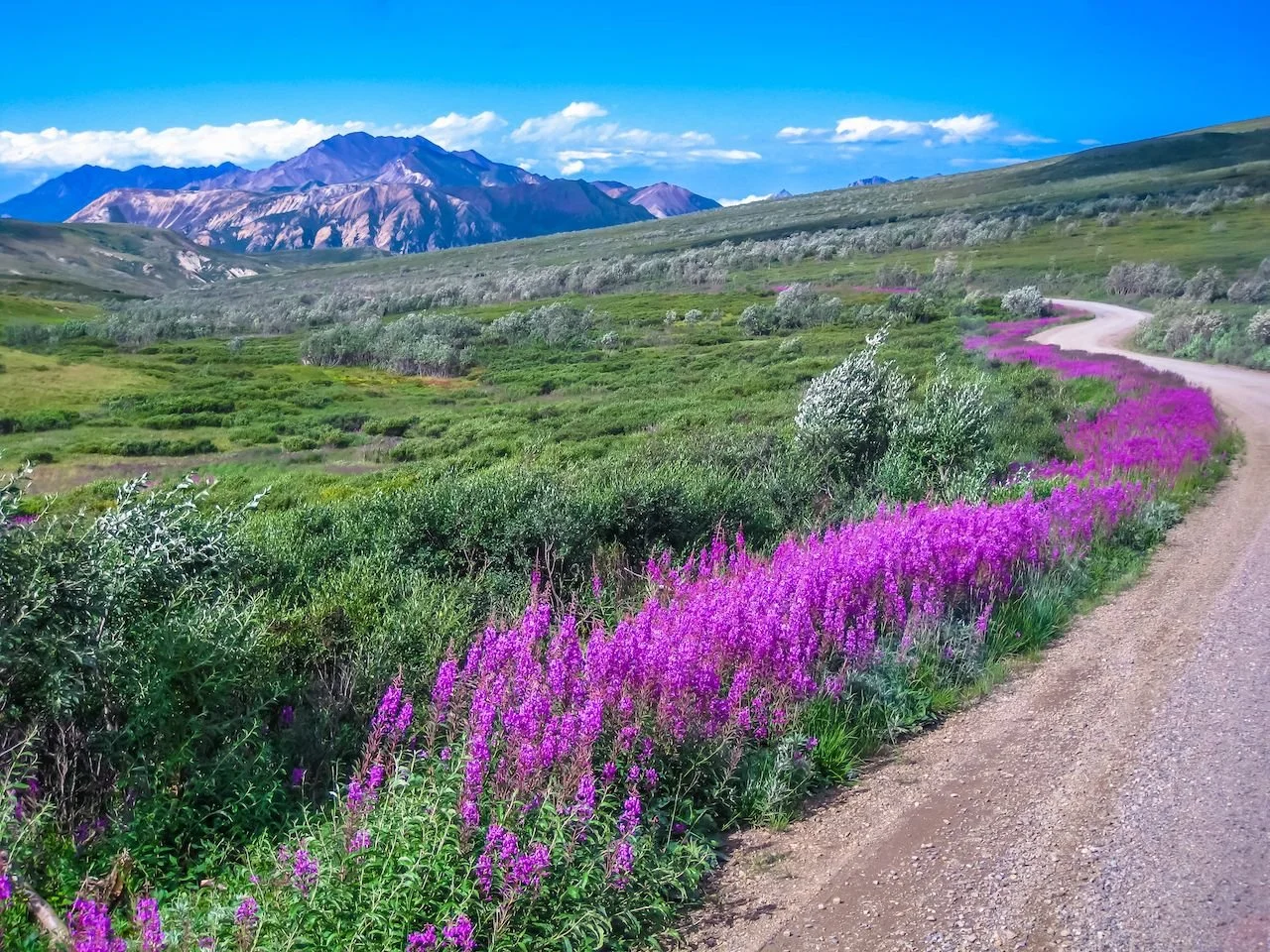
By April, daylight stretches to 14–15 hours, increasing to nearly 18 hours by late spring. Long daylight returns to the park well before stable weather, but the added light does improve travel windows and flexibility.
Daytime temperatures in spring generally range from 20–45°F, with nighttime lows around 0–25°F. Freeze–thaw cycles are common and can complicate snow travel, especially as surfaces firm up overnight and soften throughout the day. Wind can further impact both perceived temperature and travel conditions.
Snowpack remains across much of the park, particularly at higher elevations, where winter-like conditions often persist well into spring. Most park roads, campgrounds, and facilities remain closed, though Denali Park Road typically opens near the park entrance. Services begin reopening gradually in mid to late May, depending on weather and conditions.
Summer in Denali National Park and Preserve (Late May–Early September)

Summer brings nearly perpetual daylight, with up to 22 hours of sunlight near the summer solstice and no true darkness, only extended twilight. The continuous daylight allows for flexible travel windows and long days in the park.
Daytime temperatures typically range from 45–70°F, with nighttime lows between 35–50°F. Cooler conditions are common at higher elevations. Despite generally mild temperatures, the weather can still shift quickly. Rain is common, and snow remains possible at higher elevations. Much of the ground stays wet from rain and snowmelt, creating ideal conditions for mosquito activity, which peaks in mid-summer.
During the summer, park operations are in full swing. Shuttle and tour buses operate along Denali Park Road, and most visitor centers and campgrounds are open, making this the most accessible season to explore the park.
We lead guided backpacking trips in Denali designed around off-trail travel, seasonal awareness, and the realities of moving through remote Alaskan terrain. Explore our upcoming trips to find the right season and itinerary for your Denali backpacking experience.